Iceland:
http://nationfacts.net/iceland-facts/
https://www.icelandairhotels.com/en/about-icelandair-hotels/facts-about-iceland
https://www.cia.gov/library/publications/the-world-factbook/geos/ic.html
Greenland:
https://visitgreenland.com/articles/10-facts-nellie-huang/
http://nationfacts.net/greenland-facts/
https://www.cia.gov/library/publications/the-world-factbook/geos/gl.html
Sunday, April 14, 2019

Five Themes of Greenland
- Greenland was first explored by the Vikings. Greenland got its name from Norwegian-born Erik the Red after he settled in Greenland from Iceland. He named it Greenland due to the greenness of the land in the summer time.
- Most of the first of the Greenland came from Iceland.
- Greenland was claimed by Denmark in 1380. Danish colonization began in the 18th century and Greenland became integral part of Denmark in 1953.
- Greenland became a self-governed island in 1979. Denmark still has control of Greenland foreign affairs, security and financial policy in consultation with Greenland's Government.
- The absolute location of Greenland: 71.7069° N 42.6043° W
- The relative location of Iceland: Northern and Western Hemisphere
- Greenland is lays between North America and Europe. Greenland is considered part of the North American continent.
- Greenland is dissected by the Arctic Circle. Greenland is boarded by Arctic Ocean, North Atlantic Ocean, Greenland Sea, Baffin Bay, Davis Strait and Denmark Strait.
- The coastline of Greenland is a total of 27,394 miles. Greenland's land total is 836,330 square miles.
- Greenland has a mean elevation of 1,792 m above sea level.
- Greenland's coastline is mostly barren, but in some area is rugged and mountainous. Greenland does future some natural hot springs. Greenland is covered by an ice sheet that covers 80% of the island. The largest glacier in Greenland is 100 square miles. The highest point in Greenland rises 12,139 feet. There are about 20 rivers throughout Greenland. There are countless rocky islands around the central and south parts of the coastline.
- Greenland is a very cold island. Weather conditions range from sub-arctic to arctic. The average temperature in winter is -25°C and the average temperature in summer is 8°C. Greenland can have very strong winds that become dangerous in some areas. In midwinter in Greenland has Polar Nights where it is completely dark. In summer Greenland has Midnight Sun where there is sun 24/7.
- The animals of Greenland are birds, seals, arctic foxes, whales, musk oxen, polar bears and reindeer. There is a total of 235 species of birds throughout Greenland.
- All plants in Greenland need to be able to adapt to extreme conditions. Greenland is filled with seagrass, ferns, dwarf birch, willow, palm trees, saxifrage, whitlow grass, pussytoes, and polemonium boreale.
- The national day of Greenland is June 21st.
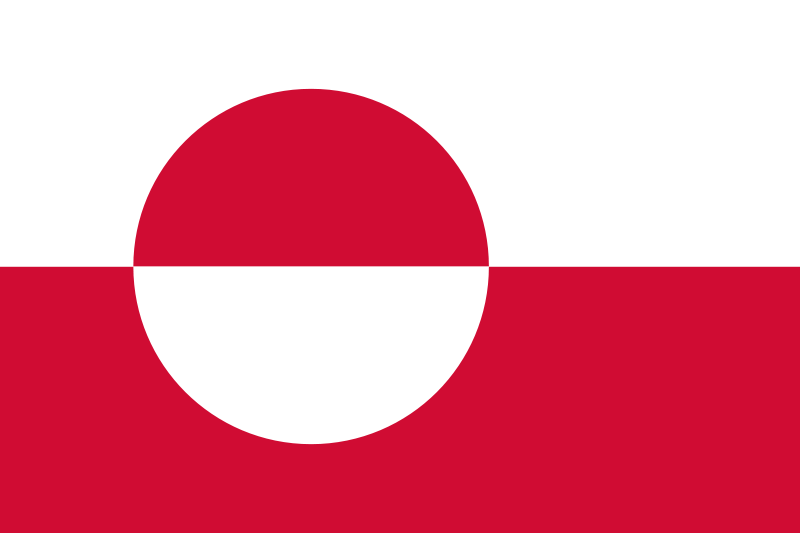
- Greenland's flag adopted officially in 1985. The white stripe on the flag represents the snowy ice caps and the red stripe represents the ocean.
- The religion of Greenland is Evangelical Lutheran.
- The languages of Greenland are Greenlandic, Danish and English. The official languages of Greenland are Greenlandic and Danish.
- The population of Greenland is around 57,000 making it the 204th largest in the world.
- Most of the population are Inuit and Danish. Most of the population live in the capital city.
- The currency of Greenland is Danish krone. Greenland's GDP is 2.17 billion.
- Greenland has a Parliamentary Democracy. Greenland is part of the kingdom of Denmark. The capital of Greenland is Nuuk.
- Greenland's extreme climate is unsuitable for effective farming, so people in Greenland rely on sheep farming, crafting, homemade jewelry and hunting as a source of income. Greenland's economy reminds dependent on exports of shrimp and fish. Greenland also relies on tourism as it has unlimited spaces and challenges for hikers, anglers, kayakers and mountain climbers.
- The peak season for tourism in Greenland is summer time. Greenland offers magnificent geology and spectacular scenery.
- Greenland has one of the largest National Parks in the world, but not many people have access to it due the inaccessibility of the area.
- Most people in Greenland live off the land and have little effect on the environment.
- People in Greenland today continue the Inuit tradition of ice-fishing and there are annual dog-sled races, however, fishing and hunting by traditional methods has been increasingly replaced by the use of firearms and modern technology.
- Greenland has no roads between towns and communities. The only way to travel around Greenland is by boats, ferries, helicopters, kayaks and planes.
- The first kayak was made in Greenland.
- As of 2016, the crude birth rate in Greenland amounted to 14.8 live births per 1,000 inhabitants.
- As of 2016, the fertility rate in Greenland amounted to 2 children per woman.
- As of 2016, the death rate in Greenland is 8.7 per 1,000 inhabitants.
- As of 2017, the median age in Greenland is 33.9 years old.
- As of 2017, 86.57% of Greenland's inhabitants live in urban areas and cities.
- As of 2016, the average life expectancy at birth in Greenland is 71.83 years old.
- As of 2016, the unemployment rate in Greenland is 9.4%
Five Themes of Iceland
- Iceland got its name from Floki Vilgeroarson after he settled in Iceland from Scandinavia. He named it Iceland after he noticed chunks of ice drifting in the fjords.
- It is believed the first settlers of Iceland arrived from Norway in 834. By the mid-900s most of Iceland's cultivable land had been snatched up.
- Around 1380 Iceland's power was shifted to Denmark. Before that Iceland had a council to moderate the land until 1262. Between 1262 and 1380 the council has trouble dealing with the increasing power.
- Iceland was one of the poorest countries in Europe. Life was hard for Icelandic people due to the barren land issues and rough climate.
- The Black Plague hit Iceland in early 1400s and about half of the population died of the disease.
- Iceland had bad luck over the next 400 years due to pirate raids, smallpox epidemic and volcanic eruptions.
- Iceland stayed under Denmark rule during the Napoleonic Wars of 1814. Iceland become independent in 1944.
- After German occupied Denmark in 1940 Iceland become occupied by British Armed forces. In 1941 United States occupied Iceland. Iceland only regained control when the war ended.
- Iceland became part of NATO in 1949.
- The first President of Iceland was Sveinn Bjornsson.
- The absolute location of Iceland: 64.9631° N 19.0208° W
- The relative location of Iceland: Northern and Western Hemisphere
- Iceland directly east of Greenland. Iceland is Europe's western country and is second largest island in the North-Atlantic Ocean. Iceland represents one of the largest glaciers left in Europe.
- Iceland is located just below the Arctic Circle. Iceland is bordered by North Atlantic Ocean, Greenland Sea and Denmark Strait.
- The coastline of Iceland is a total of 3,088 miles. Iceland's land total is 38,707 square miles.
- Iceland is mean elevation of 557 m above sea level.
- Iceland is divided into 23 counties and 14 independent towns.
- Iceland is largely an arctic desert sprinkles with mountains, glaciers, geysers, hot springs, volcanoes and waterfalls. Iceland's glaciers cover about 11% of the land. The largest glacier is 3,240 square miles. The highest part of Iceland rises at 6,922 feet.
- Iceland has a mild climate. The average temperature in winter is 1°C and the average temperature in summer is 13°C. During the summer there is continuous sun for two to three months, during the winter the days are very short and during early springs and late autumn Iceland enjoys a long twilight.
- The animals of Iceland are birds, arctic foxes, minks, rats, rabbits, reindeer, seals, whales, dolphins and fish. Iceland has about 300 species of fish. Occasionally polar bears come to Iceland on glaciers from Greenland.
- Much of Iceland has subarctic vegetation. Iceland is filled with 470 species of native plants. Iceland is filled with grasslands, bogs, marshes, moorland and heatland. Iceland has low-growing shrubs, crowberry, bog whortleberry, bearberry, willow and dwarf bitch. Iceland also has birch wood trees near cities.
- The national day of Iceland is June 7th.
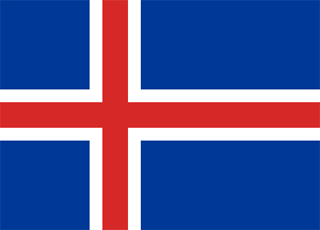
- Iceland's flag was officially adopted in 1944. Iceland's flag colors are symbolic for three of the elements that make up the island: red is for the volcanic fires, white recalls the snow and glaciers, and blue is for the skies above.
- Iceland has many religions including Lutheran, Ramon Catholic and Reykjavik and Hafnarfjorour free church.
- The languages of Iceland are Icelandic, English, Nordic languages and German. The official language is Icelandic.
- The population of Iceland is around 350,000 making it the 177th largest in the world.
- Most of the population are descents of Norse and Celts. An estimated 9% of the population are from foreign countries.
- Most of the population live near the coastline.
- The currency of Iceland is Icelandic krona. Iceland's GDP is 16.15 billion.
- For many decades Iceland enjoyed a strong economy with low unemployment, low inflation, and a per capita income among the highest in the world. Unfortunately, due to the 2009 worldwide economic collapse, Iceland still suffers through a severe financial crisis.
- Iceland has a Parliamentary Republic. The capital of Iceland is Reykjavik.
- Iceland economy relies on farming, manufacturing industries, construction and utilities, fisheries and tourism.
- Iceland is a source of natural renewable energy. Most houses in Iceland are supplied with heating and energy using renewable energy sources. Icelanders have a strong bond with the environment.
- Iceland can be reach by plane or cruise ships. Iceland is easier to get around then Greenland. Iceland has no railway transportation. The ways to get around Iceland are by bus, cars, or taxi.
- Tourism in Iceland is big especially during the summer. Tourist in Iceland can see geysers, waterfalls, volcanoes, hot water springs, glaciers and wildlife.
- As of 2017, the crude birth rate in Iceland amounted to 13.7 live births per 1,000 inhabitants.
- As of 2016, the fertility rate in Iceland amounted to 1.6 children per woman.
- As of 2016, the death rate is about 6.9 per 1,000 inhabitants.
- As of 2015, the median age in Iceland is 35.6 years old.
- As of 2017, 93.77% of Iceland's inhabitants live in urban areas and cities.
- As of 2016, the average life expectancy at birth in Iceland is 82.47 years old.
- As of 2017, the unemployment rate in Iceland is 2.79%
Saturday, April 13, 2019
Iceland and Greenland similarities and differences
When you think of Iceland and Greenland, you think Iceland is filled with ice and Greenland is filled with grasslands. If you think that you would be wrong, it is actually the opposite. Iceland is greener then Greenland and Greenland is more ice then Iceland. Iceland has about 10% of ice covering the island. Greenland has about 80% of ice covering the island. Which island do you think is bigger and has more of population? Let's find out and see more similarities and differences these two islands have.
Iceland is a independent county, but Greenland is part of Denmark. Both islands are 60 degrees North of the Earth's equator. The land area of Iceland is 100,250 square kilometers and the water area is 2.750 square kilometers. The land area of Greenland is 2,166,086 square kilometers. Winters in Iceland and Greenland are about the same, they both have little sunlight. Summers in Iceland and Greenland are similar too, the sun never seems to go away. Both islands have hardly any native species of plants and animals. Both islands have no native reptiles or amphibians. Both islands rely on their natural resources.
The Vikings were the first European settlers on both Greenland and Iceland. The Vikings were the very first settlers on Iceland, but not on Greenland. The Inuit tribes were the very first settlers on Greenland. Both islands have a small population. Iceland has around 350,000 people while Greenland has around 57,000. Greenland is 21 times larger than Iceland. Both islands have a Parliamentary government, but Iceland is a Republic Parliamentary government and Greenland is a Democracy Parliamentary government. The currency in Iceland is Krona while the currency in Greenland is Krone.
Iceland is a independent county, but Greenland is part of Denmark. Both islands are 60 degrees North of the Earth's equator. The land area of Iceland is 100,250 square kilometers and the water area is 2.750 square kilometers. The land area of Greenland is 2,166,086 square kilometers. Winters in Iceland and Greenland are about the same, they both have little sunlight. Summers in Iceland and Greenland are similar too, the sun never seems to go away. Both islands have hardly any native species of plants and animals. Both islands have no native reptiles or amphibians. Both islands rely on their natural resources.
The Vikings were the first European settlers on both Greenland and Iceland. The Vikings were the very first settlers on Iceland, but not on Greenland. The Inuit tribes were the very first settlers on Greenland. Both islands have a small population. Iceland has around 350,000 people while Greenland has around 57,000. Greenland is 21 times larger than Iceland. Both islands have a Parliamentary government, but Iceland is a Republic Parliamentary government and Greenland is a Democracy Parliamentary government. The currency in Iceland is Krona while the currency in Greenland is Krone.
Friday, April 12, 2019
Pictures of Iceland

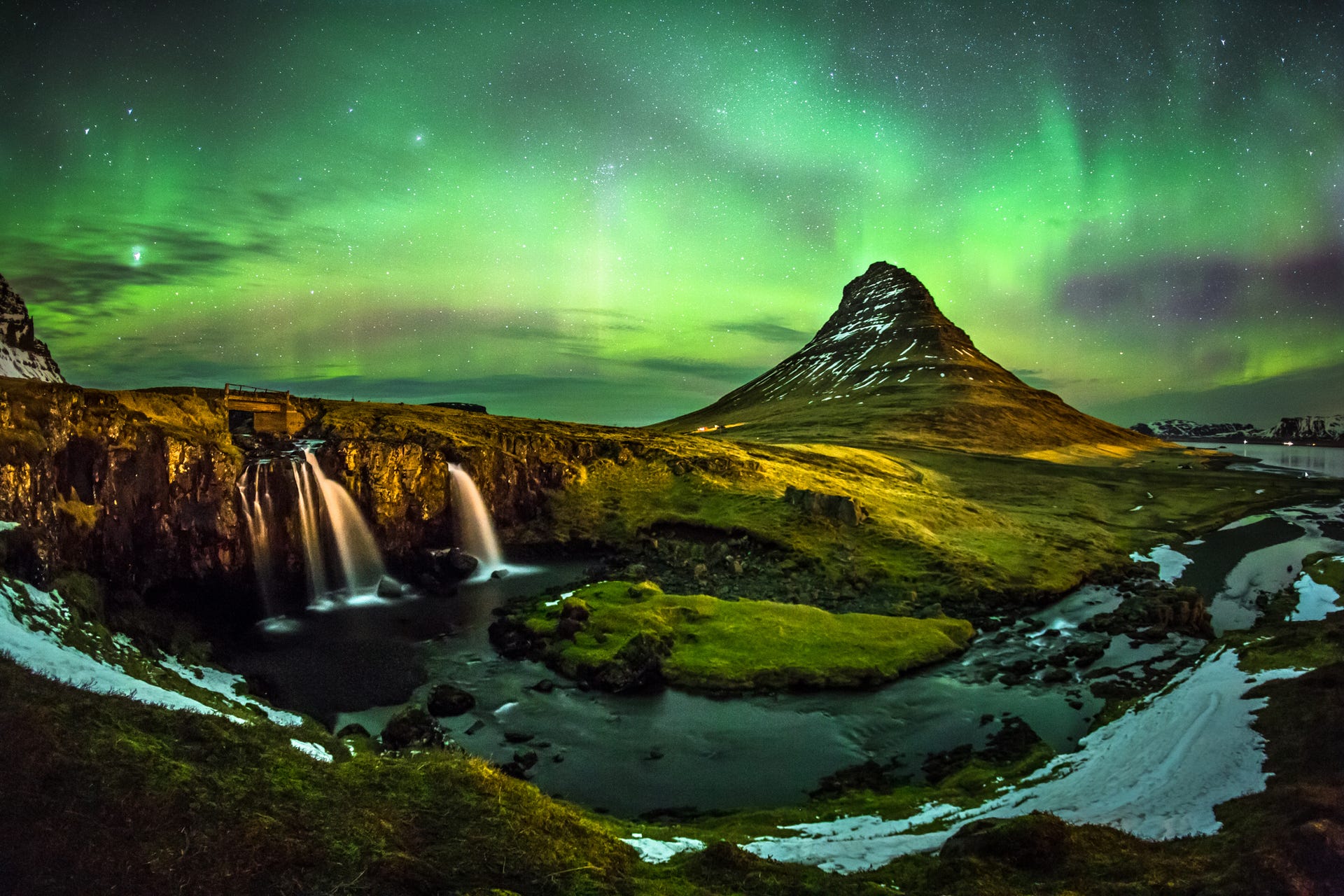


Images retrieved from:
Tcsimingto. (2019, February 18). The most beautiful places in Iceland. Retrieved April 12, 2019, from https://www.usatoday.com/picture-gallery/travel/destinations/2018/12/22/most-beautiful-places-iceland/2395922002/
All photos belong to Getty Images
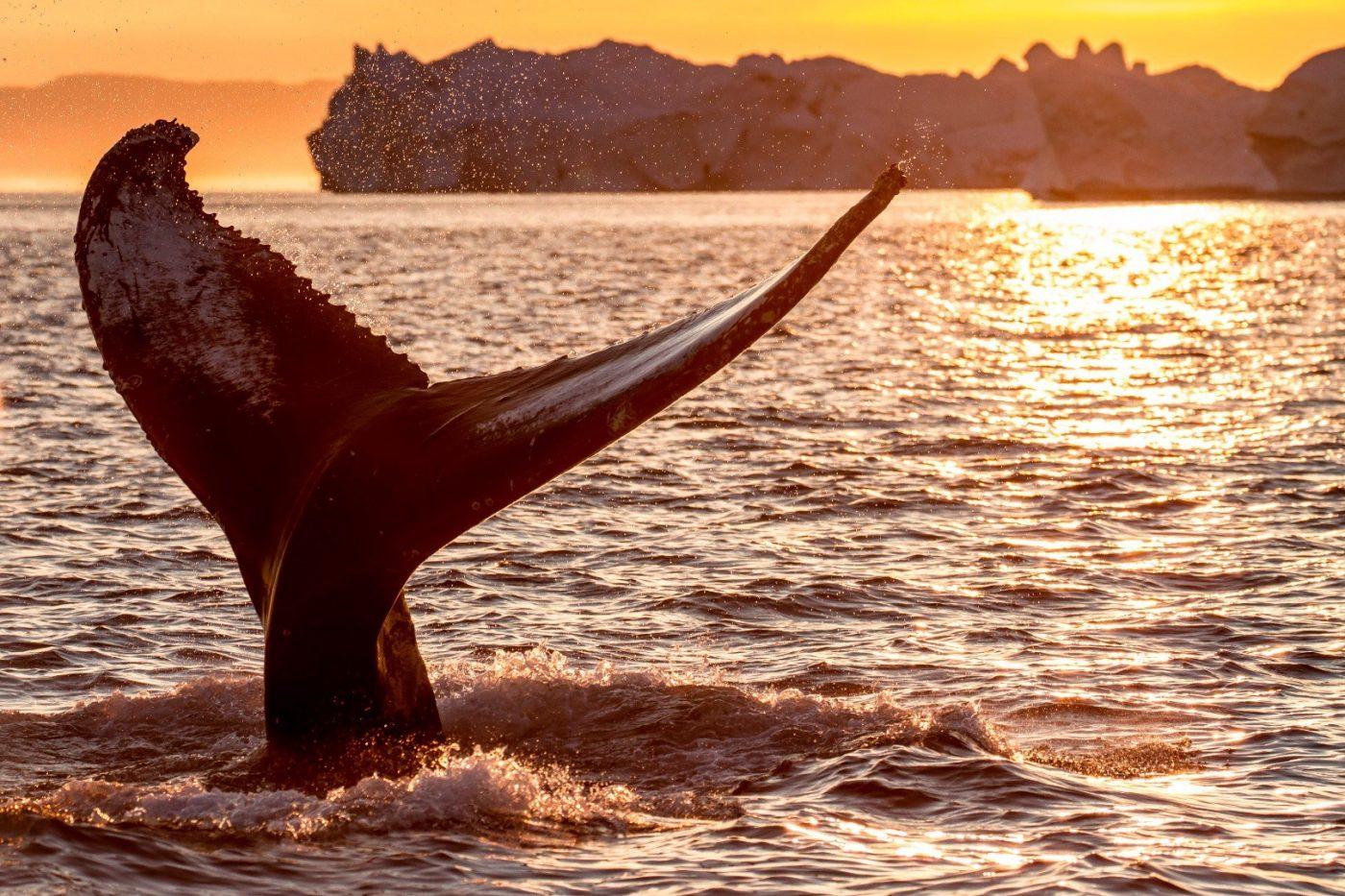
Pictures of Greenland
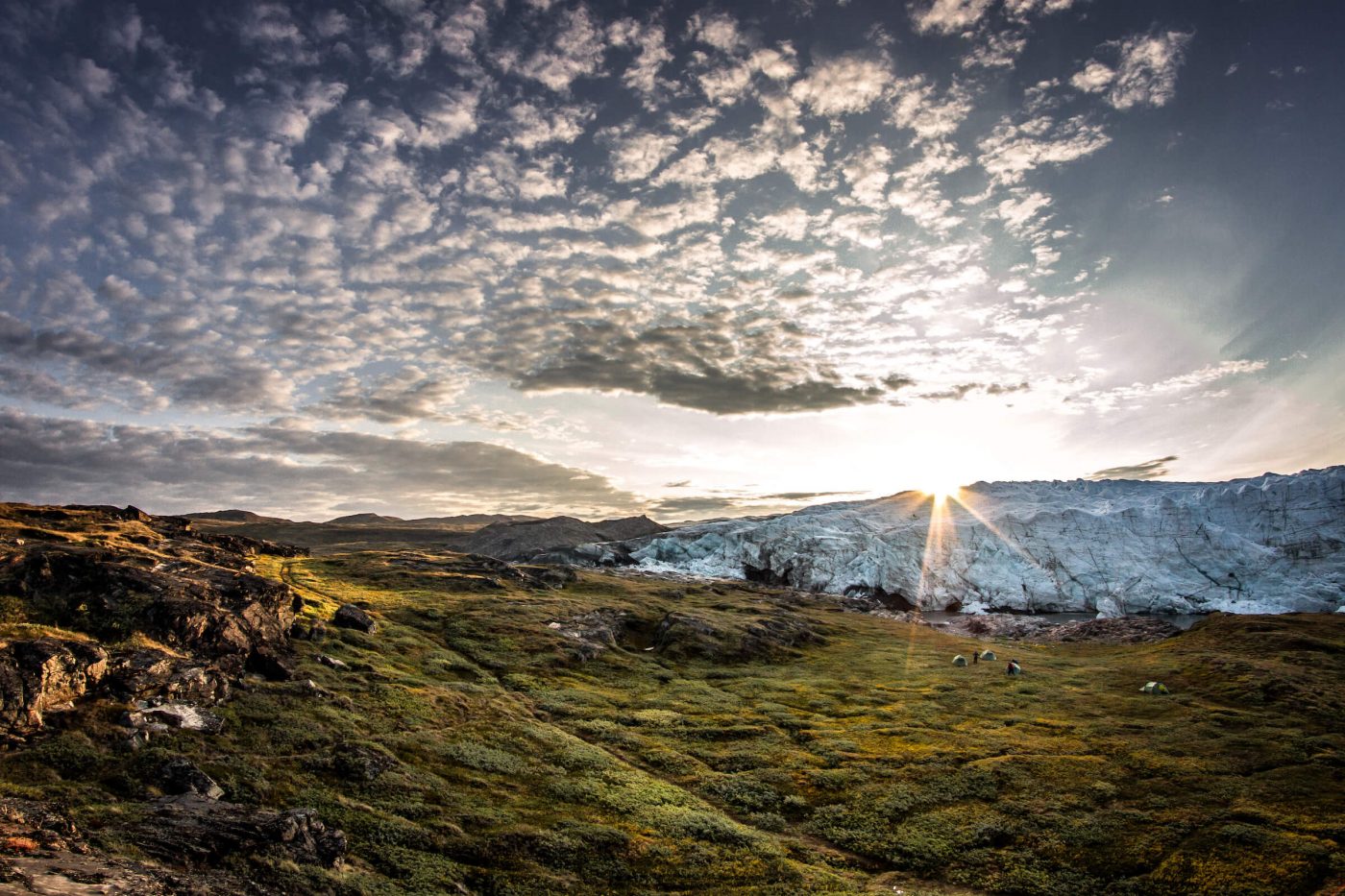
The edge of the Greenland Ice Sheet at Russell Glacier near Kangerlussuaq in Destination Arctic Circle in Greenland
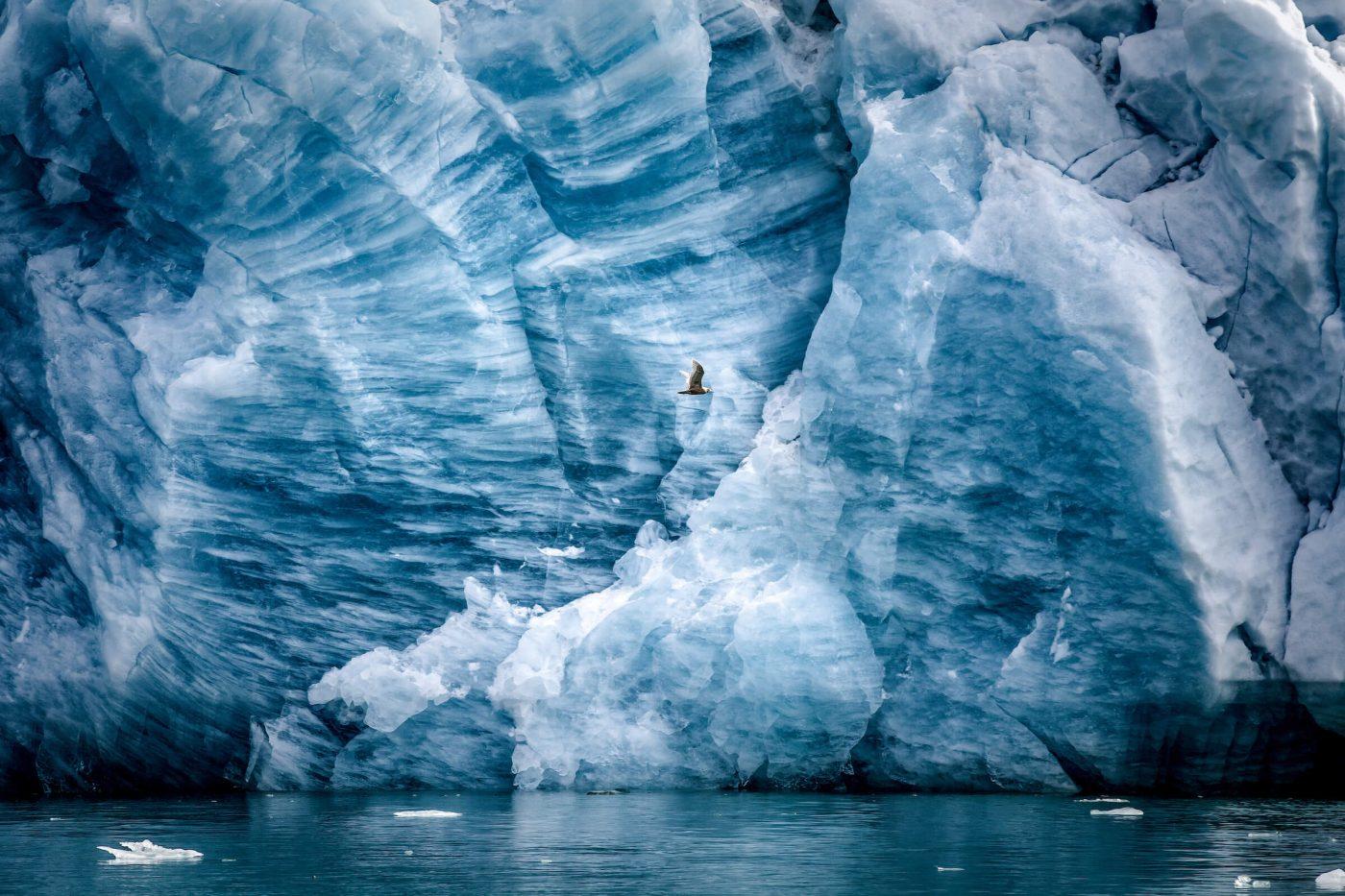
A seagull by a glacier wall in the Eternity Fjord in Greenland near Kangaamiut, by Mads Pihl

Flightseeing with Air Zafari near Iluliartoq in Kangerlussuaq in Greenland
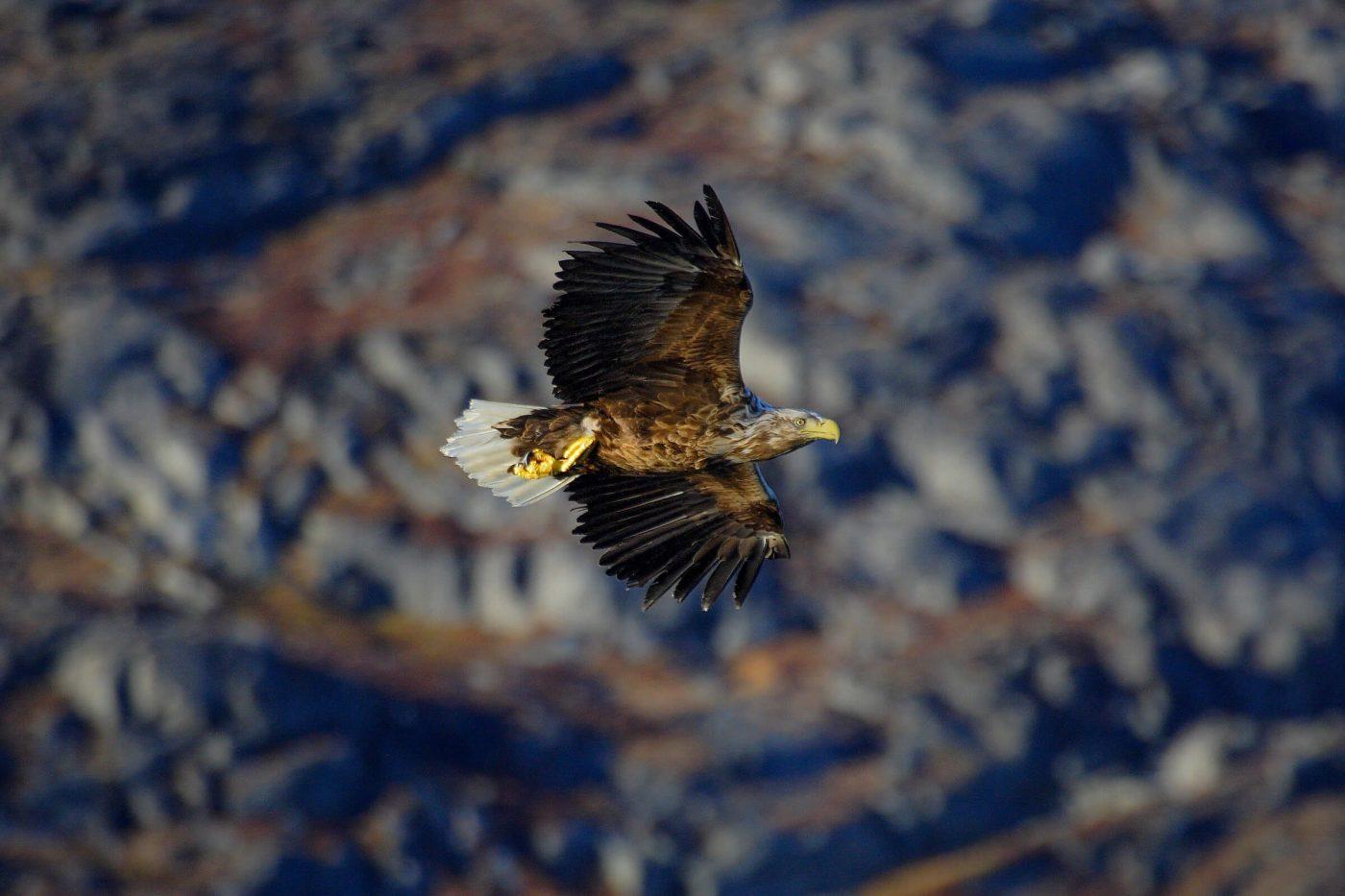
Images retrieved from:
About Greenland - [Visit Greenland!]. (n.d.). Retrieved April 12, 2019, from https://visitgreenland.com/about-greenland/
References
Iceland References:
Europe/. (2017, April 07). Retrieved April 12, 2019, from https://www.worldatlas.com/webimage/countrys/europe/is.htm#page
The Official Gateway to Iceland. (n.d.). Retrieved February 22, 2019, from https://www.iceland.is/
Tcsimingto. (2019, February 18). The most beautiful places in Iceland. Retrieved April 12, 2019, from https://www.usatoday.com/picture-gallery/travel/destinations/2018/12/22/most-beautiful-places-iceland/2395922002/
Iceland, N. (n.d.). Transport. Retrieved April 14, 2019, from https://www.northiceland.is/en/other/index/transportation
Nace, S. (n.d.). Topic: Iceland. Retrieved April 14, 2019, from https://www.statista.com/topics/3079/iceland/
GraphicMaps. (2018, January 17). Where is Iceland? Retrieved April 14, 2019, from https://www.graphicmaps.com/iceland#flag
Greenland References:
North America/. (2017, April 07). Retrieved April 12, 2019, from https://www.worldatlas.com/webimage/countrys/namerica/greenland/glmaps.htm#page
About Greenland - [Visit Greenland!]. (n.d.). Retrieved April 12, 2019, from https://visitgreenland.com/about-greenland/
Greenland - birth rate 2006-2016 | Statistic. (2019, January). Retrieved April 14, 2019, from https://www.statista.com/statistics/976909/crude-birth-rate-in-greenland/
GraphicMaps. (2018, January 17). Where is Greenland? Retrieved April 14, 2019, from https://www.graphicmaps.com/greenland
Europe/. (2017, April 07). Retrieved April 12, 2019, from https://www.worldatlas.com/webimage/countrys/europe/is.htm#page
The Official Gateway to Iceland. (n.d.). Retrieved February 22, 2019, from https://www.iceland.is/
Tcsimingto. (2019, February 18). The most beautiful places in Iceland. Retrieved April 12, 2019, from https://www.usatoday.com/picture-gallery/travel/destinations/2018/12/22/most-beautiful-places-iceland/2395922002/
Iceland, N. (n.d.). Transport. Retrieved April 14, 2019, from https://www.northiceland.is/en/other/index/transportation
Nace, S. (n.d.). Topic: Iceland. Retrieved April 14, 2019, from https://www.statista.com/topics/3079/iceland/
GraphicMaps. (2018, January 17). Where is Iceland? Retrieved April 14, 2019, from https://www.graphicmaps.com/iceland#flag
Greenland References:
North America/. (2017, April 07). Retrieved April 12, 2019, from https://www.worldatlas.com/webimage/countrys/namerica/greenland/glmaps.htm#page
About Greenland - [Visit Greenland!]. (n.d.). Retrieved April 12, 2019, from https://visitgreenland.com/about-greenland/
Greenland - birth rate 2006-2016 | Statistic. (2019, January). Retrieved April 14, 2019, from https://www.statista.com/statistics/976909/crude-birth-rate-in-greenland/
GraphicMaps. (2018, January 17). Where is Greenland? Retrieved April 14, 2019, from https://www.graphicmaps.com/greenland
Tuesday, February 19, 2019


Monday, February 18, 2019


Subscribe to:
Comments (Atom)